Medical Assistant Externship: Why Hands-On Experience Matters
Accredited medical assistant training programs combine clinical knowledge, administrative skills, and patient interaction. Classroom training builds that foundation, while an externship gives students the opportunity to apply those skills in a real healthcare setting. By working alongside healthcare professionals and interacting with patients, students can gain practical experience before entering the field.
Let’s explore what an externship involves, the skills students can develop, and how hands-on experience can support workplace readiness.
What Happens During a Medical Assistant Externship?
A medical assistant externship places students in a working healthcare environment where they can observe and practice skills learned during their training. At Westchester School for Medical and Dental Assistants (WSMDA), externships take place in local medical offices, giving students practical exposure to the day-to-day setting of medical assisting.
The experience can help students become familiar with:
- Patient interactions and communication
- Treatment room procedures
- Clinical workflows
- Medical office expectations
- Working alongside healthcare professionals
- Professional conduct and workplace routines
Turning Classroom Knowledge Into Practice
Classroom instruction covers the principles behind medical assisting. Students study subjects such as anatomy and physiology, medical terminology, patient relations, clinical practices, EKG procedures, and laboratory techniques.
An externship provides a setting where those lessons can become practical skills.
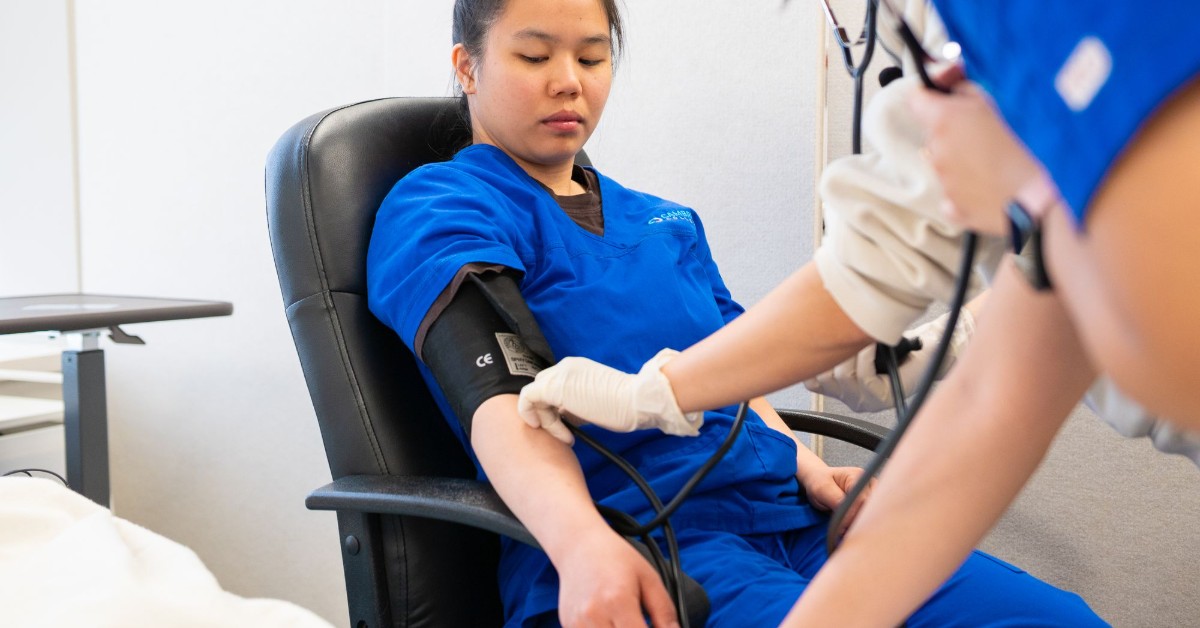
For example, knowing the steps involved in taking vital signs is different from carrying out the process while communicating with a patient and working within an active medical office.
Skills Students Can Develop
Depending on the placement and responsibilities, students may have opportunities to strengthen skills related to:
Patient Care
Interacting directly with patients helps students practice clear, respectful, and professional communication.These skills are important when preparing patients for examinations and supporting their comfort.
Clinical Procedures
Students can build familiarity with procedures covered during their coursework, including treatment room practices, EKG-related skills, and laboratory techniques. WSMDA’s program specifically includes clinical practice, electrocardiography, and an introduction to medical laboratory procedures before the externship component.
Workplace Communication
A medical office requires communication between assistants, providers, patients, and other staff members. An externship gives students experience communicating within that environment and following workplace procedures.
Building Confidence Before Entering the Field
Walking into a medical office for the first time can feel very different from sitting in a classroom. An externship gives students a chance to become familiar with the pace, expectations, and professional standards of a healthcare workplace before beginning their careers.
Accredited medical assistant training programs pair classroom and lab instruction with dedicated externship hours, creating a structured balance between academic learning and practical workplace experience.
How an Externship Can Strengthen a Résumé
Employers want to know that an entry-level candidate understands the responsibilities of the position.
An externship can demonstrate familiarity with:
- Clinical and administrative environments
- Patient-facing responsibilities
- Professional communication
- Healthcare workplace expectations
- Applying classroom knowledge in practice
Enroll in Our Accredited Medical Assistant Training Program at WSMDA
Hands-on experience can be an important part of preparing for a career in medical assisting. WSMDA’s 900-hour Medical Assistant Program combines classroom and lab instruction with 270 hours of externship experience in a work environment. We offer a flexible schedule, with day and evening classes.
To learn more about our program, externship experience, class schedules, and enrollment, contact us online or call (914) 682-9001.
